FALAH scientific mission to Kerepua (Santo, Vanuatu) Ten days of immersion in research, education and food systems in an island context
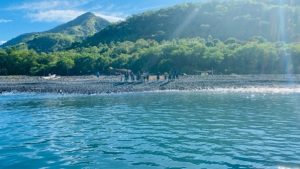
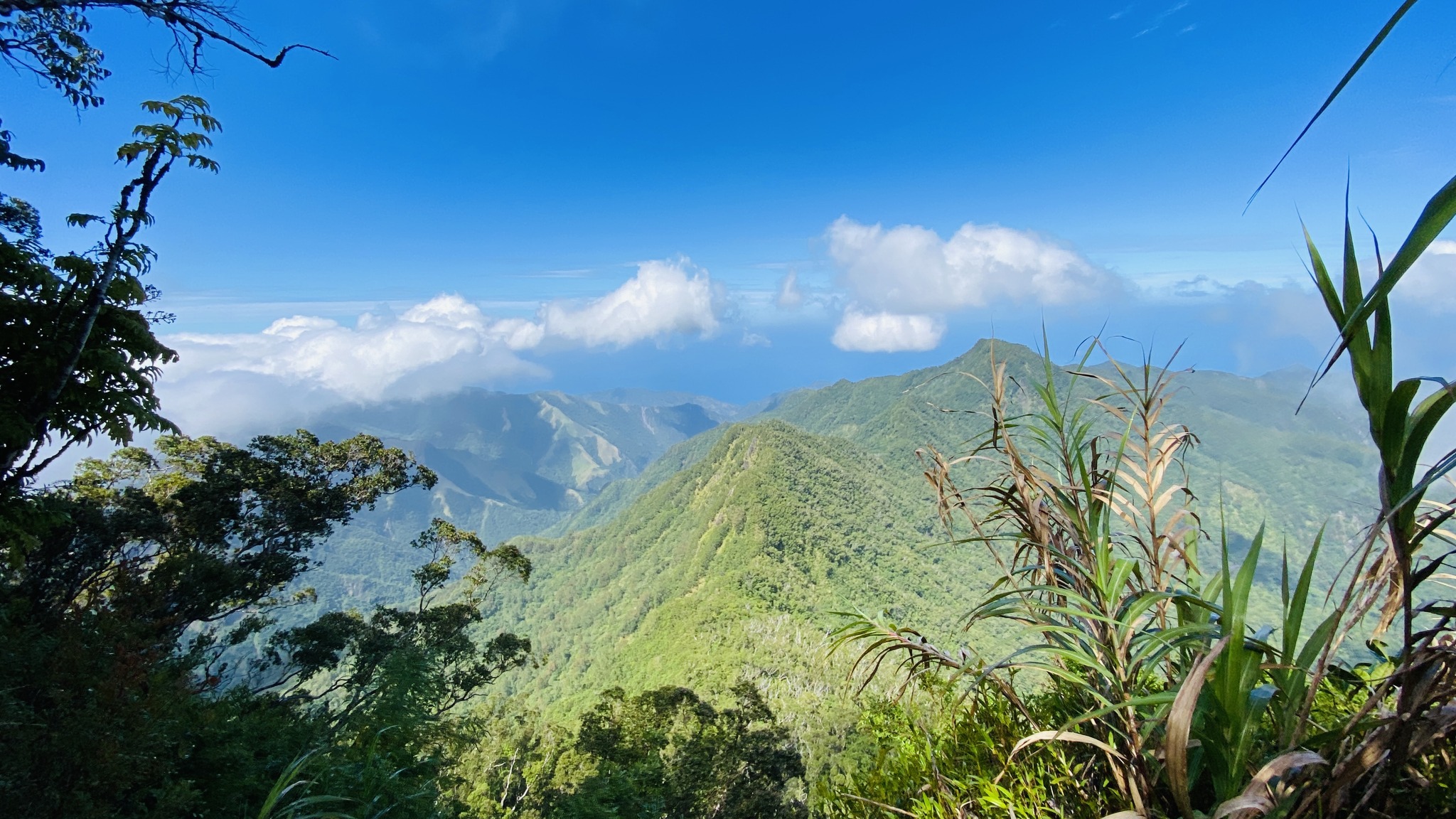
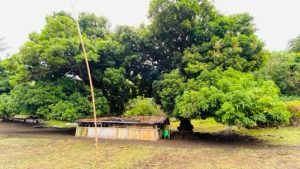
Mount Tabwémasana and the community of Kerepua (Santo Island, Vanuatu) constitute a unique field of study for the FALAH team in their research on island food systems, due to their history, exceptional environment and the profound socio-territorial transformations they have undergone.
The mountain is of major scientific importance. In the 1920s, English explorer and zoologist John R. Baker was the first scientist to reach its summit, mapping the region and publishing his work in The Geographical Journal (1929). He returned in 1933 as part of an Oxford University Expedition, which confirmed Tabwémasana as the highest peak in the New Hebrides and collected several thousand zoological, botanical and entomological specimens. Until the 1970s, the inhabitants lived in mountain villages such as Nokovula. In 1978, they migrated to the coast under the combined influence of missionaries, access to services and difficult conditions at altitude.
This relocation profoundly transformed food practices, mobility and land use, and the relationship with the environment between the mountains and the coast. It is in this ecological, cultural and historical context that the FALAH scientific mission takes place.
Community immersion and initial exchanges
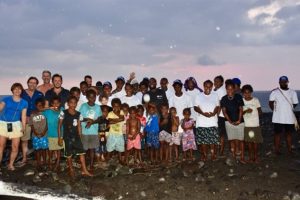
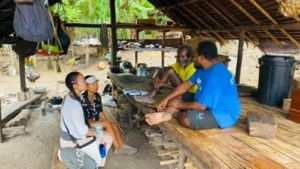
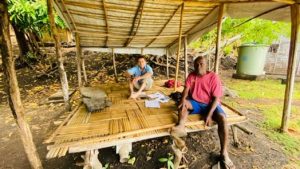
For ten days, the FALAH team lived in the community of Kerepua, documenting the evolution of food systems and social, cultural and environmental dynamics.
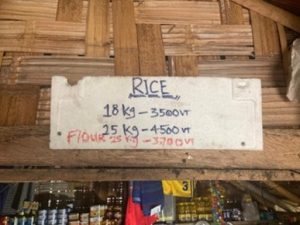
The first few days were spent analysing the stories passed down by elders, current agricultural practices, available food resources and intergenerational changes.
Co-design and community participation – with a focus on schools
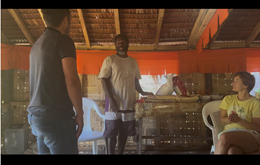
At the heart of the mission, several co-design workshops were held to work with residents to build a shared vision for the village's food future.
Intergenerational workshops
The discussions identified priority challenges, available community resources and realistic courses of action to strengthen food sovereignty.
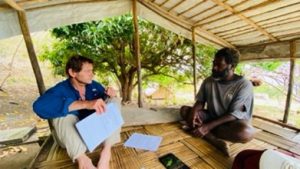
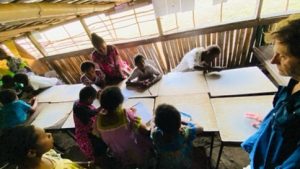
Co-design in schools
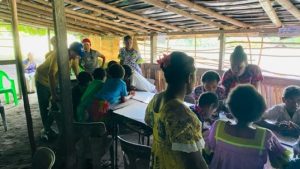
Specific work was carried out with pupils and teachers at Kerepua School to understand children's perceptions of food, nature and their local area; to use drawings, mind maps, stories and educational games; to identify educational needs related to nutrition, traditional knowledge, climate and biodiversity; and finally to strengthen the link between research, teaching and families.
The scientific ascent of Mount Tabwémasana
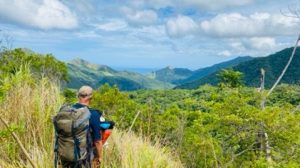
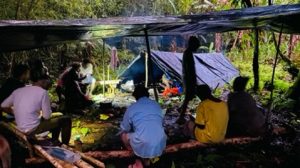
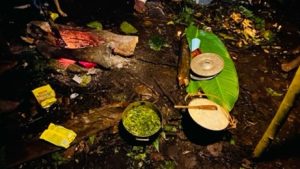
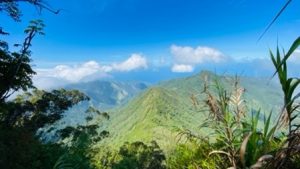
One of the highlights was the four-day ascent of Mount Tabwémasana (1,875 m), accompanied by 19 guides, porters, researchers and local residents.
Scientific objectives:
- Understanding the historical links between the community and this mountainous area.
- Documenting traces of ancient occupation and their connection to past food practices.
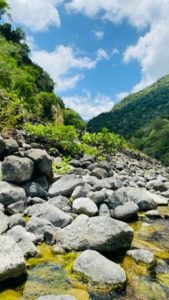
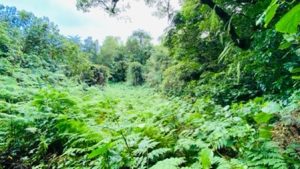
The walk began by following a river upstream, a traditional route that once connected the sea and the mountains, then continued through forests, gardens, ancient villages and areas of unique biodiversity.
Cooperation, knowledge transfer, perspectives and economic challenges
Discussions throughout the mission were marked by a strong sharing of knowledge, mutual listening and a shared desire to ensure that research meets the real needs of the community.
Economic challenges: agrotourism and conservation
Community discussions also highlighted the growing importance of economic issues for family resilience:
The development of agrotourism around the Kerepua community ecolodge, which welcomes hikers, researchers and visitors interested in local culture, nature and knowledge.
The presence of the EARA (Environment and Resource Area) conservation zone, located at the entrance to Mount Tabwémasana, is a major issue: it protects the biodiversity of the massif while offering opportunities for sustainable economic benefits linked to environmental management, nature tourism and the promotion of local knowledge.
These economic dimensions, combined with participatory research, open up concrete prospects for supporting food sovereignty, economic resilience and environmental protection in a context of global climate change.
This mission is part of the RISE FALAH programme, funded by the European Union, as well as the Pacific Fund of the Ministry for Europe and Foreign Affairs (MEAE), with the support of the French Embassy in Australia.
It brings together a collaborative scientific team composed of:
- the University of New Caledonia
- the University of Sydney and the Charles Perkins Centre
- the National University of Vanuatu